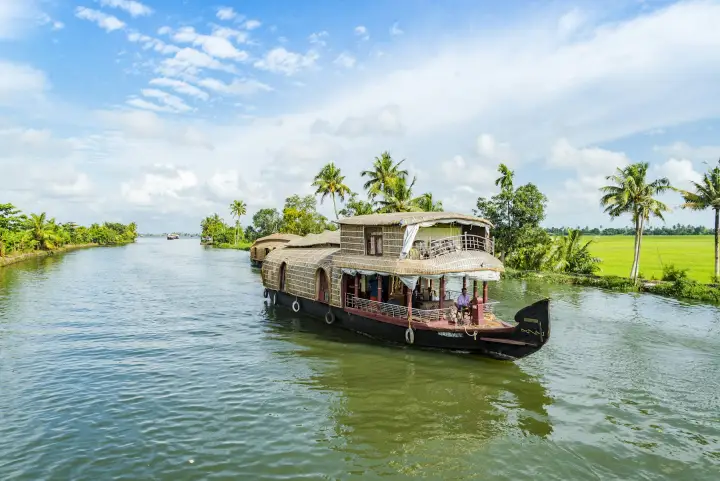
Wayanad
Wayanad travel guide: caves, peaks, lakes and wildlife
Edakkal Caves, Chembra Peak, Banasura Sagar, Kuruva Island and Tholpetty: how to plan a few days in Wayanad.
, 2 min read , about Wayanad
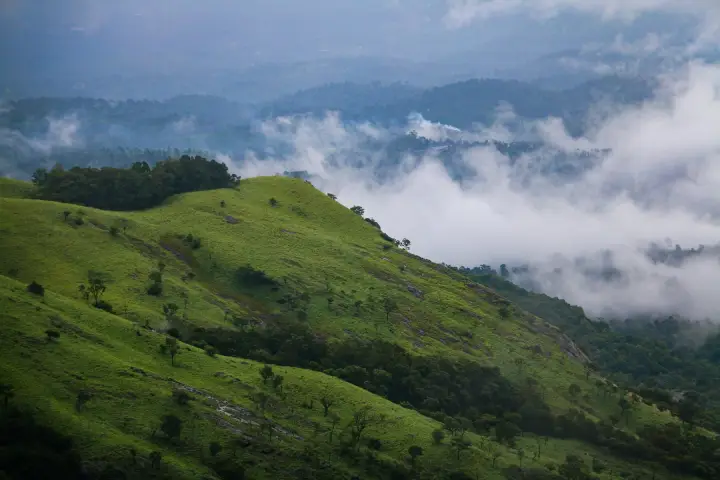
Wayanad is a district of hills, paddy fields and plantations on the edge of the Deccan Plateau, in the north-east of Kerala. Its forests are part of the Nilgiri Biosphere Reserve, and it has more to see than most visitors expect, so plan at least three days.
Getting around
Most people arrive from Kozhikode, climbing the nine hairpin bends of the Thamarassery pass to Lakkidi and Vythiri. Kalpetta, the district headquarters, sits in the middle. Sulthan Bathery is the main town in the east, and Mananthavady in the north. The three areas make a natural way to split your days.
Around Vythiri and Kalpetta
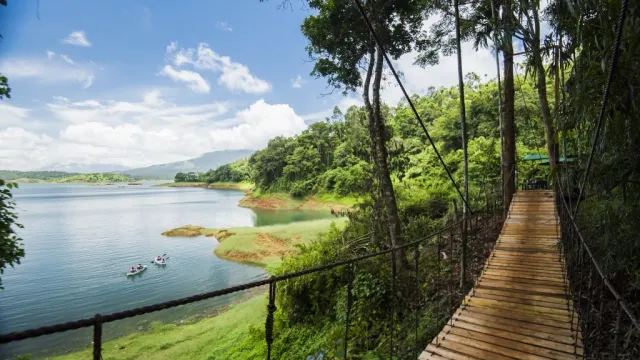
Stop at the Lakkidi viewpoint and the Chain Tree on the way up. Pookode Lake, the highest freshwater lake in Kerala, has pedal boats and forest paths. En Ooru, Kerala's first tribal heritage village, is nearby at Pookode. North-west of Kalpetta, Banasura Sagar is India's largest earth dam, with speed boats and treks on the hills above. Karlad Lake next to it runs a 250-metre zipline and kayaking.
Meppadi: Chembra and Soochipara
Chembra Peak, at 2,100 metres the highest in Wayanad, is a guided trek of three to four hours from Meppadi, past the heart-shaped Hridaya Saras lake. Permits come from the Forest Department. Soochipara Waterfalls is close by, a 2 km walk from the road to a three-tiered fall.
Sulthan Bathery: history
The Edakkal Caves on Ambukuthi Mala hold rock engravings thousands of years old, reached by a steep climb. The Wayanad Heritage Museum at Ambalavayal has hero stones and tribal artefacts, and the 13th-century Jain temple in Sulthan Bathery gave the town its name.
Mananthavady: river and forest
Bamboo rafts cross the Kabini to Kuruva Island, a cluster of uninhabited river islands. Jeep safaris run through Tholpetty Wildlife Sanctuary, and Thirunelli Temple stands in the Brahmagiri hills beyond it.
When to go
October to May is best for sightseeing and treks. The monsoon brings very heavy rain in Lakkidi, Vythiri and Meppadi; some trails and wildlife areas close during the wettest months.